How to Plan Display Printing for Retail Shops and Events
Quick summary: Plan display printing by deciding whether you need awareness or footfall, measuring the space you have, and choosing a format that suits the crowd and the reading distance. Compare size, material, durability, cost per use, price, lead time and artwork support. Standard production is 4–5 working days plus courier delivery, so order at least two weeks ahead and leave time for corrections.
A shop window that looks the same as the one opposite wastes a good week, and a display still boxed on the morning of an event helps nobody. Display printing covers it all: roller banners, pop-up stands, window graphics and counter units. This guide gives you a four-step plan, realistic UK lead times and real starting prices, drawn from our day-to-day work in Dorset.
Step 1: Set the goal and audit the space
Decide whether you need awareness or footfall
Start with one clear aim. Awareness displays, such as roller banners or window graphics, tell people who you are from a distance. Footfall displays, like counter units or shelf posters, prompt action at the point of sale. Knowing which you need shapes the size, wording and budget. A display that fits your venue usually does one job well, not both.
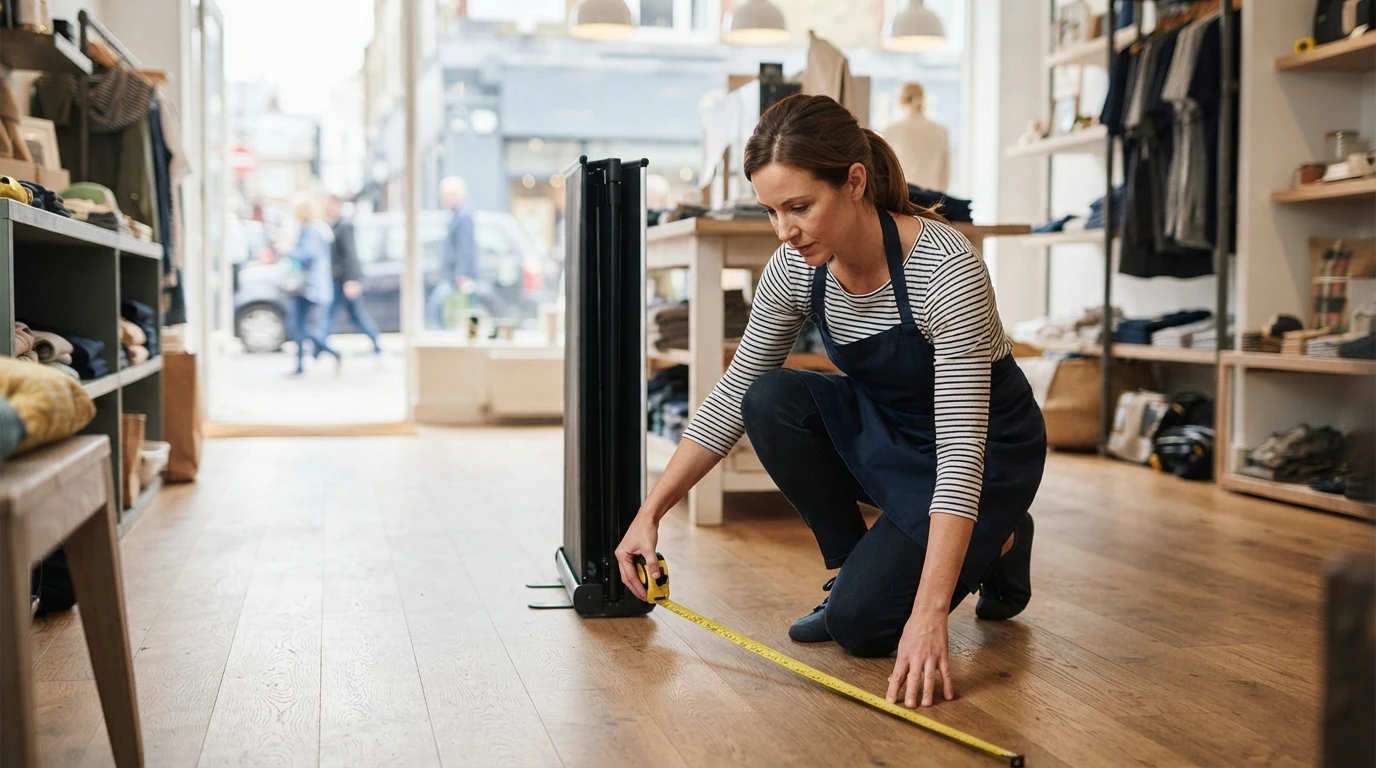
Measure the floor area and where people will stand
Grab a tape measure before you order anything. Note the floor space you can spare, doorways, walkways and where visitors will actually stand. Reading distance matters: text readable at two metres works for a doorway; close-up copy suits a counter. Match the display to the space, not the other way round.
Tip: sketch the space on paper with measurements, then choose a display that leaves at least a metre of walkway clear.
Step 2: Pick the display format that fits
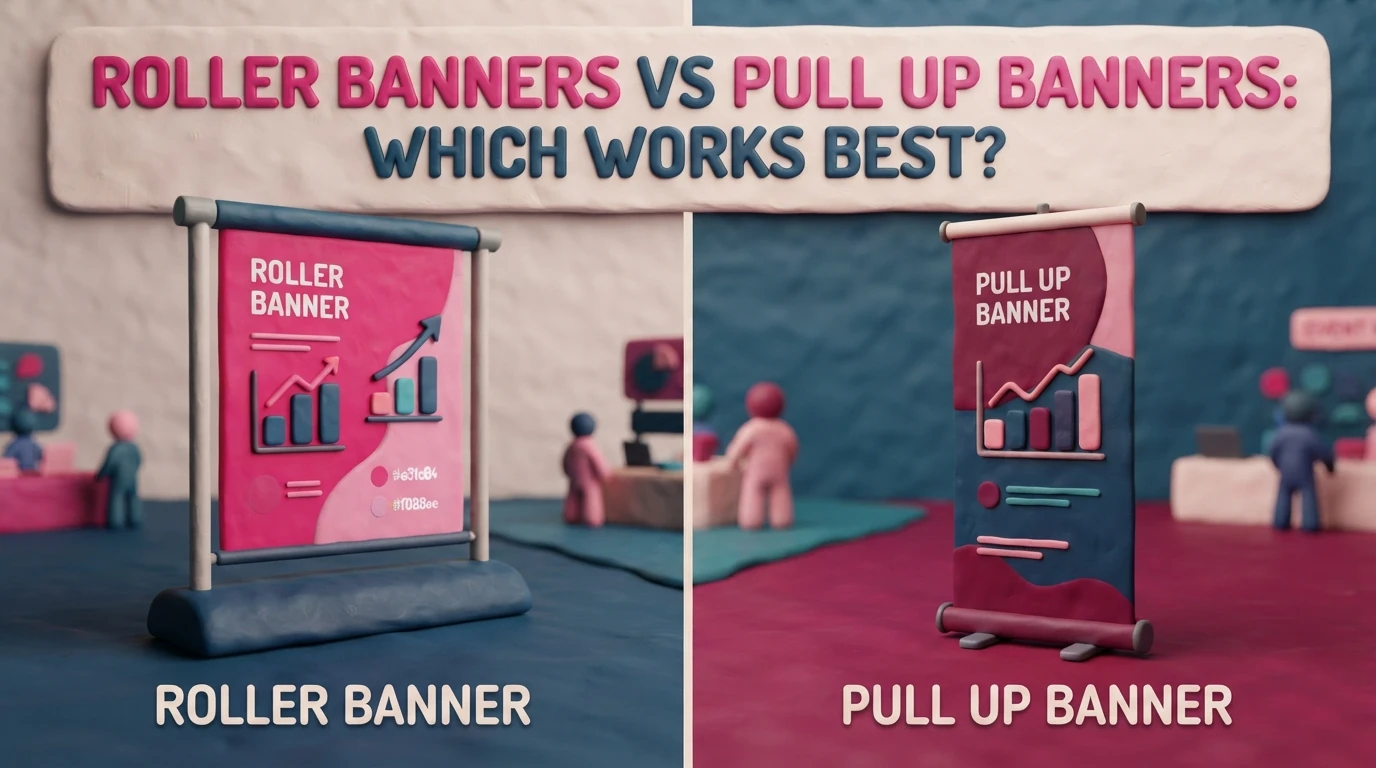
Roller banners for anything portable
Most roller banners stand 2000mm tall, so the real choice is width. 850mm and 1000mm are the standard widths, with 1500mm and 2000mm models for bigger spaces. Pick 850mm for tight corners and 1000mm when two people will stand beside it. Our roller banners start from £79 ex VAT, printed on light-stop grey-back material so venue lighting won't shine through.
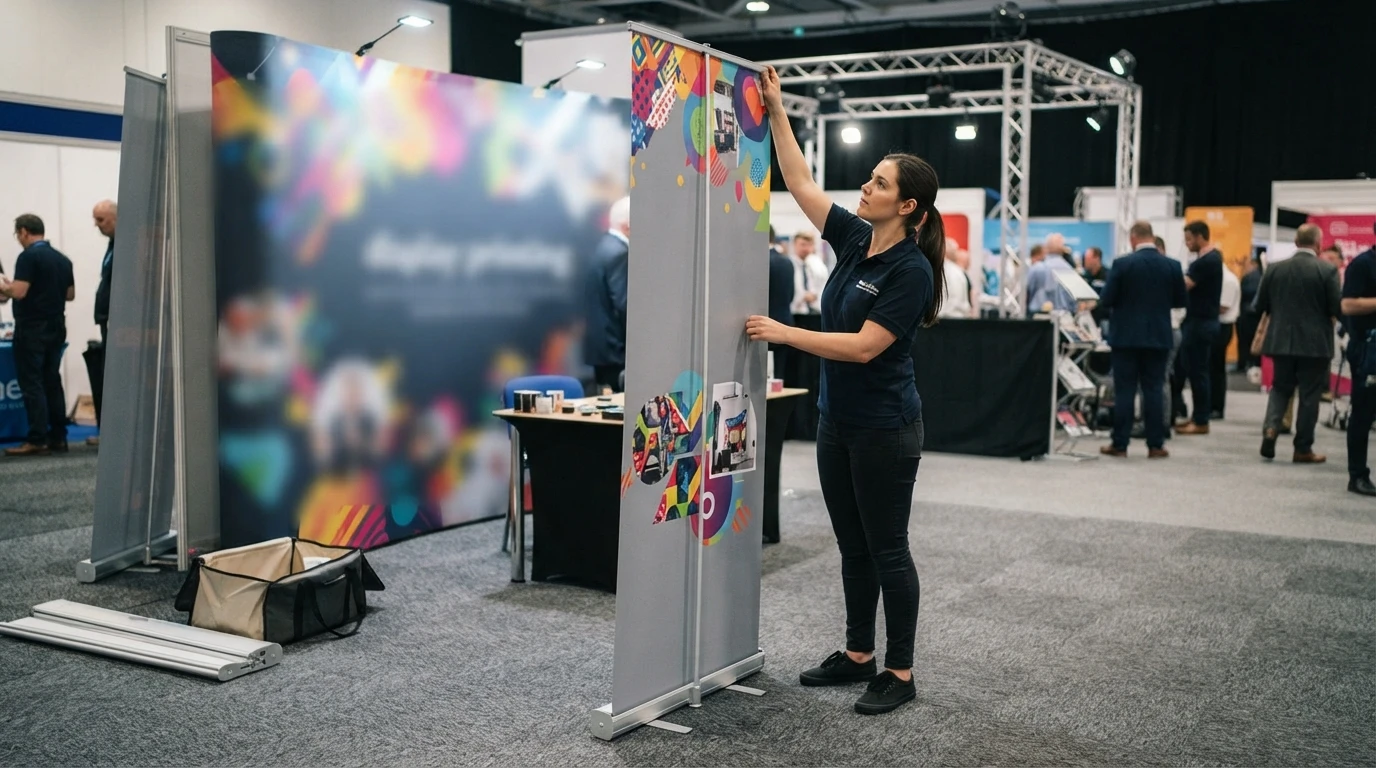
Pop-up, fabric and SEG stands for set-piece spaces
Bigger footprints need bigger kit. SEG fabric pop-up stands start from £520 ex VAT and run from 770mm to nearly 3m wide, while stretch fabric stands from £140 ex VAT keep things light to carry. SEG fabric graphics sit flush in their frame, which suits an exhibition spot you return to each year.
Before you order, count how often you'll set the display up. A banner you use monthly costs pennies each time; a larger stand pays off with regular shows.
Step 3: What to compare before ordering printed displays
Before ordering, compare six things:
- Size and footprint – will it fit the stand or shop space?
- Reading distance – can people read it from where they'll stand?
- Material – will venue lighting shine through or wash out the print?
- Durability – can you reuse it, or is it one event only?
- Price and lead time – do both fit your budget and event date?
- Artwork help – will someone look over your file before it prints?
Size, footprint and how many people will see it
Match the display to the space and the crowd. A slim 850mm roller banner suits tight corners, while a wider pop-up stand fills a back wall, so check the venue's floor plan first.
Material, finish and whether the print reads in bad light
Ask what the graphic is printed on. Light-stop grey-back material blocks venue spotlights, and a matt finish cuts glare. For outdoor events, weatherproof material matters more than a smooth finish.
Durability, reuse and what happens after the event
Think in cost per use, not price per unit. A well-made roller banner or traditional pop-up stand can serve many events, while paper posters are cheap but single-use.
Price, lead time and artwork support
Standard turnaround is 4–5 working days, plus courier delivery, so order well ahead of your event date. Most printers work from print-ready files, so ask whether someone will look over your artwork before it goes to press – catching a problem early is far cheaper than a reprint.
Step 4: Brief the artwork and leave room for the lead time
Display printing takes 4–5 working days as standard, so plan your artwork early. Tight on time? Send us a quote request and we'll get straight back to you.
Send artwork that is ready to print
Check your file against the printer's artwork templates before you send it. Use the right fonts, colours and bleed, and flatten large images. A quick review now saves a costly reprint later.
Work backwards from your event or promotion date
Note your event date, then count back the production time and courier delivery, plus a few spare days for corrections. Courier times are outside any printer's control, so never plan delivery for the morning of the event itself.
Planning display printing for a fixed date is easier with clear lead times. Browse roller banners and event printing at Print in the Bag, or call 0800 094 93 92.
Conclusion
Plan in four steps: set the goal, measure the space, pick the format, then brief the artwork early. Order two weeks ahead, think in cost per use, and build in a buffer before your event date.
Make Your Business Online By The Best No—Code & No—Plugin Solution In The Market.
30 Day Money-Back Guarantee
Say goodbye to your low online sales rate!
What should businesses compare before ordering printed displays?
Compare size and footprint, reading distance, material, durability, price, lead time and whether someone will look over your artwork. Every point should fit your space, budget and event date before you commit.
How far in advance should I order?
Order at least two weeks ahead. Standard production is 4–5 working days, plus courier delivery and a buffer for corrections.
Which roller banner width should I choose?
Pick 850mm for tight corners or 1000mm when two people will stand beside it. Wider 1500mm and 2000mm models suit bigger spaces.